
Analyzing a Bowel Emergency Case: Why the Timeline Can Make or Break the Case
The plaintiff attorney calls you to say she has a new case involving what she thinks is a delay in diagnosing a bowel emergency. Her client lost 9 feet of bowel. She wants you to evaluate the case for possible negligence.
When you get the records, you note the patient complains of abdominal pain. The discomfort worsens over several hours. Nausea turns into vomiting. The abdomen becomes distended. Vital signs begin to change and the laboratory values become more concerning. Hours later, the surgeon discovers a segment of necrotic bowel.
For the legal nurse consultant, the question is not simply what happened? The questions are
- when did it happen,
- what clues were available,
- when should the healthcare team have reacted, and
- how did the healthcare team respond?
Bowel emergencies often develop over time. The sequence of symptoms, assessments, diagnostic studies, consultations, and treatment decisions frequently determines whether the standard of care was met.
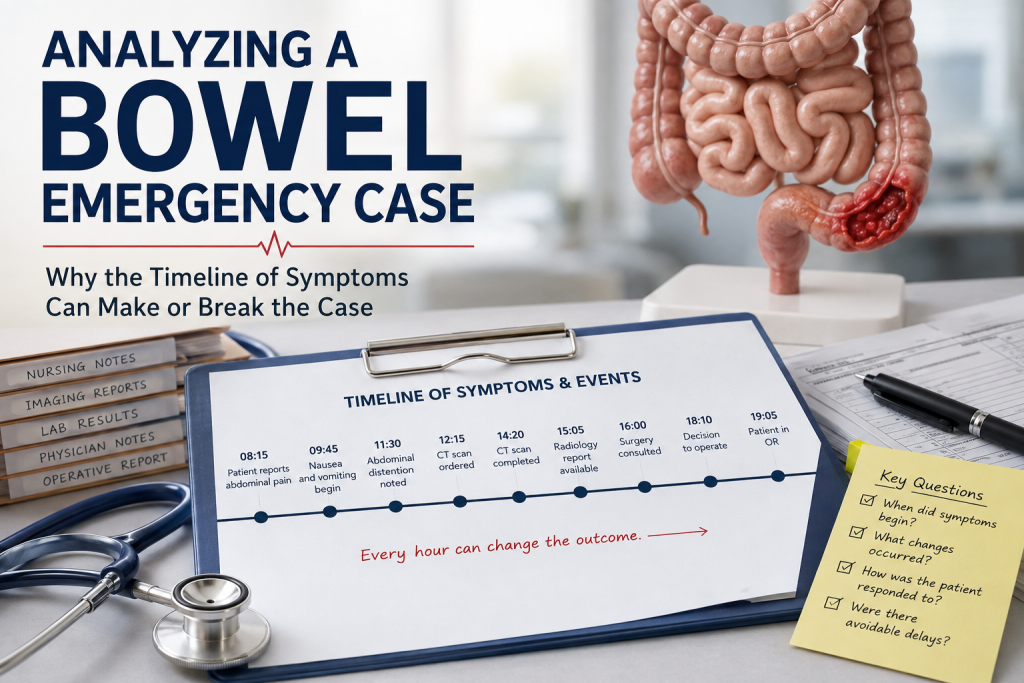
One of the most valuable services an LNC provides is creating a detailed timeline that allows the attorney and experts to understand exactly how the events unfolded.
Bowel Emergencies Can Progress Quickly
Several conditions can produce catastrophic consequences if diagnosis or treatment is delayed.
A patient with a bowel obstruction may initially present with crampy abdominal pain, nausea, vomiting, abdominal distention, and inability to pass stool or flatus. If the obstruction persists, blood flow to the bowel may become compromised, leading to ischemia and eventually tissue death.
A volvulus occurs when the bowel twists on itself, cutting off both intestinal contents and blood supply. Delay in treatment can result in perforation, sepsis, and death.
Mesenteric ischemia or other causes of necrotic bowel may present with pain that seems out of proportion to the physical examination early in the course of the illness. As bowel tissue dies, the patient’s condition can deteriorate rapidly.
These are medical emergencies where every hour may matter.
The Timeline Tells the Story
Medical records rarely present events in an easy-to-follow sequence. Documentation may be scattered among nursing notes, physician progress notes, emergency department records, operative reports, laboratory data, imaging reports, and consultant notes.
The LNC’s timeline organizes those records into a logical progression. A well-prepared timeline answers questions such as:
- When did the patient first report abdominal pain?
- How did the patient describe the pain?
- Did the location or severity change?
- Did the physician and nurse document the same level of pain?
- When did vomiting begin?
- Was abdominal distention documented?
- Were bowel sounds present, absent, or hyperactive?
- When was the surgeon notified?
- When was imaging ordered?
- How long did it take for the CT scan to be completed and interpreted?
- What were results?
- When were the results reported to the provider?
- When was the decision made to operate?
- How much time elapsed before surgery began?
- What did the surgery reveal?
Seeing those events in chronological order often reveals delays that are difficult to recognize when reading hundreds or thousands of pages of records.
Look Beyond the Physician Documentation
One common mistake is focusing only on physician notes. Nursing documentation often captures changes in the patient’s condition well before a provider writes a progress note.
Pay close attention to:
- Increasing pain scores
- Repeated complaints of nausea
- Episodes of vomiting
- Changes in abdominal assessment
- Rising heart rate
- Falling blood pressure
- Fever
- Decreasing urine output
- Escalating requests for pain medication
- Changes in mental status
These entries may demonstrate that the patient’s condition was worsening over several hours before additional diagnostic testing or treatment occurred. Telephone calls to physicians, secure messages, rapid response activations, and shift-to-shift reports may also provide valuable information about clinical deterioration.
Diagnostic Delays Matter
Many bowel emergency cases involve questions about whether diagnostic testing occurred promptly.
As you review the records, compare each step in the process.
- When was imaging ordered?
- When was it actually performed?
- When was the radiologist’s report available?
- When did the treating physician acknowledge the findings?
- When was the surgeon consulted?
- When did the patient arrive in the operating room?
Each interval deserves careful attention. Delays sometimes occur because of communication failures rather than clinical judgment. Systems issues related to the availability of the operating room or lack of staff may also create delays.
Laboratory Trends Add Context
Laboratory values should never be viewed in isolation. Trending results over time often strengthens your analysis.
Watch for:
- Rising white blood cell count
- Increasing lactate levels
- Metabolic acidosis
- Electrolyte abnormalities related to vomiting
- Worsening kidney function caused by dehydration or shock
When you add these changes to the clinical timeline, they may demonstrate progressive deterioration that should have prompted additional action.
Don’t Overlook Imaging Reports
CT scans, abdominal x-rays, ultrasound reports, and operative findings frequently become pivotal evidence.
Compare the radiologist’s interpretation with the provider’s documentation.
- Did the treating team recognize concerning findings?
- Was the significance documented?
- Did the treatment plan change appropriately after the imaging results became available?
Sometimes the report clearly identifies obstruction, ischemia, or possible volvulus, yet several additional hours pass before surgical intervention occurs. Your timeline helps attorneys recognize those intervals.
The Timeline Becomes the Foundation
A carefully prepared timeline does far more than organize records. It allows attorneys to understand the sequence of events without searching through thousands of pages. It highlights inconsistencies in documentation and identifies areas that deserve additional investigation.
Most importantly, it provides an objective picture of what occurred from the patient’s arrival through surgery—or, in tragic cases, through irreversible bowel injury or death.
Build Your Skills in Medical Record Analysis
Cases involving bowel obstruction, volvulus, ischemic bowel, and other abdominal emergencies require careful attention to timing, documentation, and clinical decision-making. The stronger your record analysis skills, the more value you bring to attorneys handling these complex cases.
If you want to sharpen your ability to recognize subtle documentation issues, organize complex medical records, and produce timelines that attorneys appreciate, join us for the 14th LNC Success® Online Conference, taking place September 9–11, 2026.
You’ll learn practical techniques from experienced presenters who analyze challenging medical cases every day. Each session is designed to help you strengthen your skills, expand the services you offer, and increase your confidence when working on high-value litigation.
 Pat Iyer is president of The Pat Iyer Group, which develops resources to assist LNCs in obtaining more clients, making more money, and achieving their business goals and dreams.
Have you heard the most recent podcasts on Legal Nurse Podcast? The show is in its 10th year, putting it in the top 1% of all podcasts for its longevity. Watch our podcast on YouTube at http://LNC.tips/YouTube.
Join our Facebook group, LNC Business Growth Circle, to be part of our LNC community. Subscribe to Pat Iyer’s Substack on writing tips, called The Writer’s Toolbox. Here is where to subscribe.
Pat’s related websites include the podcasts broadcast at podcast.legalnursebusiness.com, and writing tips supplied at http://patiyer.com.