
When Medical Records Create More Questions Than Answers
Attorneys and legal nurse consultants are handed enormous sets of medical records and expected to extract meaning, timelines, causation, and liability. Yet the reality is far more challenging:
Critical signs of decline may be mentioned only once or missed entirely.
Symptoms appear in one note but vanish in the next.
Delays in care hide shift notes that look uneventful on the surface.
Documentation gaps weaken what should be strong cases.
Life-altering conditions unfold quietly before anyone responds.
This complexity slows reviews, increases risk, and places enormous pressure on legal teams trying to build strong arguments or make sound case-selection decisions.
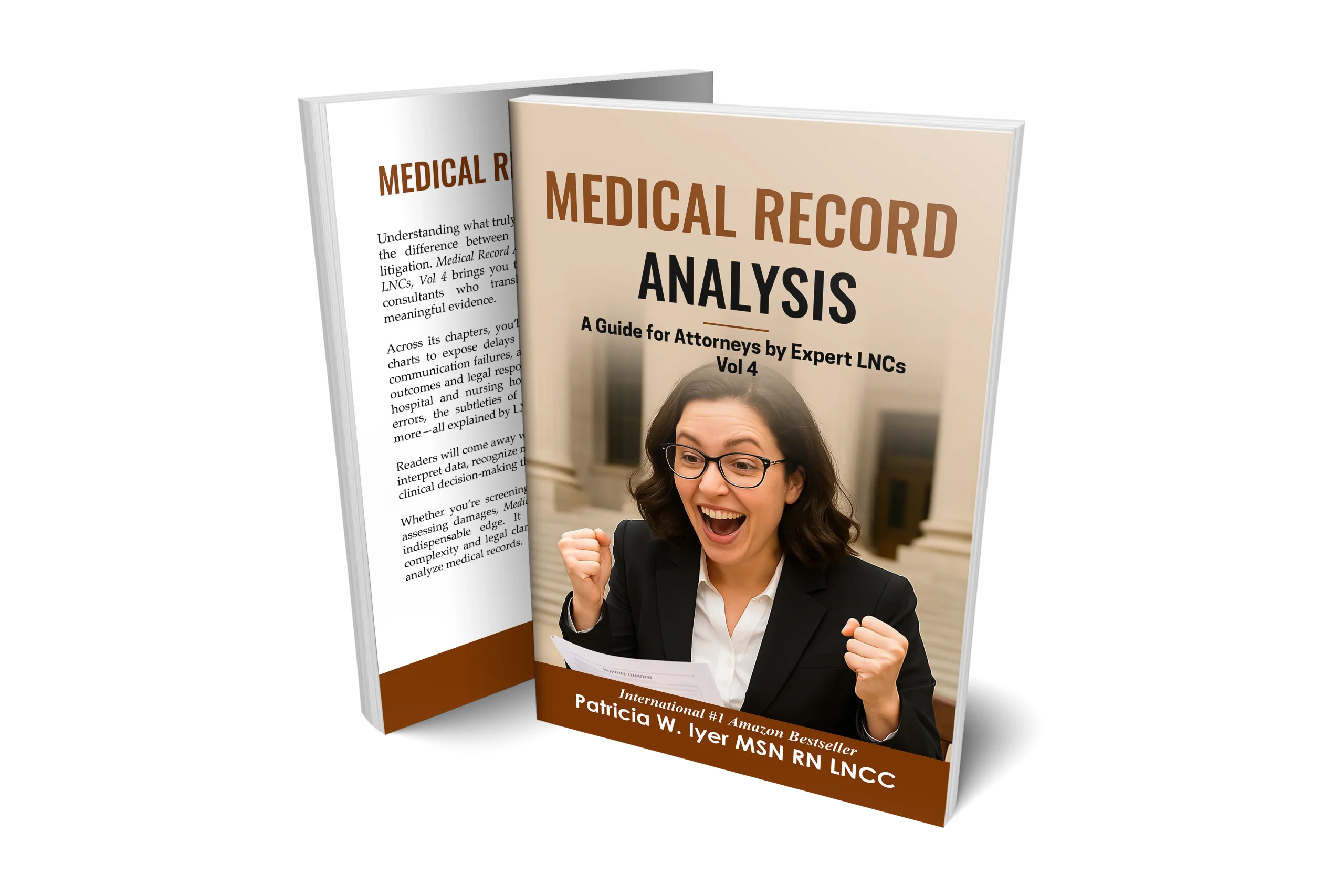
This is where Volume 4 of the Medical Record Analysis series steps in.
Written by experienced legal nurse consultants with deep clinical backgrounds, it helps you interpret complicated medical issues clearly and confidently.
What This Volume Covers
Volume 4 continues the tradition solidified in the 3 previous volumes of delivering practical, case-based insight. We focus on some of the most frequent and most misunderstood problems in litigation.
Chapters explore:
The consequences of delayed recognition of conditions such as cauda equina syndrome, stroke, and compartment syndrome
Common patterns behind emergency department misdiagnoses
Failures in monitoring related to PCA pumps, sedation, and alarm fatigue
The clinical indicators of deep vein thrombosis, pulmonary embolism, and other high-risk conditions
How routine issues such as IV infiltrates turn into preventable injury claims
Documentation issues in nursing homes that influence liability and damages
Why lung cancer continues to generate litigation across the country
Complexities of pediatric pain evaluation
What ICU notes reveal about delirium, agitation, and sedation
How undiagnosed deficiencies and overlooked symptoms lead to fatal consequences
You also receive a dedicated section on analyzing pain and suffering—a central component in many cases that affects both case valuation and strategy.
Why This Book Belongs in Your Working Library
It helps you interpret complex medical conditions with clarity.
Each chapter distills clinical details into understandable explanations that directly support legal analysis.
It strengthens the accuracy of your reviews.
You’ll know what to look for, where to find it, and what the documentation is really saying—especially when something is missing.
It saves valuable time.
Instead of piecing together scattered resources, you gain direct, practical explanations from seasoned legal nurse consultants.
It reflects the realities of both health care and litigation.
The contributors have experienced these medical situations at the bedside and analyzed them in legal cases. Their insights help you understand how events unfold and how those events should appear in the record.
It supports your ability to counter assumptions about AI-generated summaries.
Technology can sort and organize documents, but clinical thinking—pattern recognition, interpretation, and judgment—comes from human expertise. This book reinforces that distinction and equips both attorneys and LNCs with the depth needed for high-quality case evaluation.
About the Editor
Patricia W. Iyer MSN RN LNCC brings decades of clinical, legal, and editorial experience to this series. She has written or edited more than 70 books for attorneys and legal nurse consultants, served on the board of the American Association of Legal Nurse Consultants—including a term as president—and built a nationally known LNC business before selling it and returning as an educator and mentor.
Her experience shapes this volume into a well-organized, highly practical resource for anyone who reviews medical records.
Who This Book Is For
If medical records form the foundation of your work, this book will quickly become a frequently used reference.
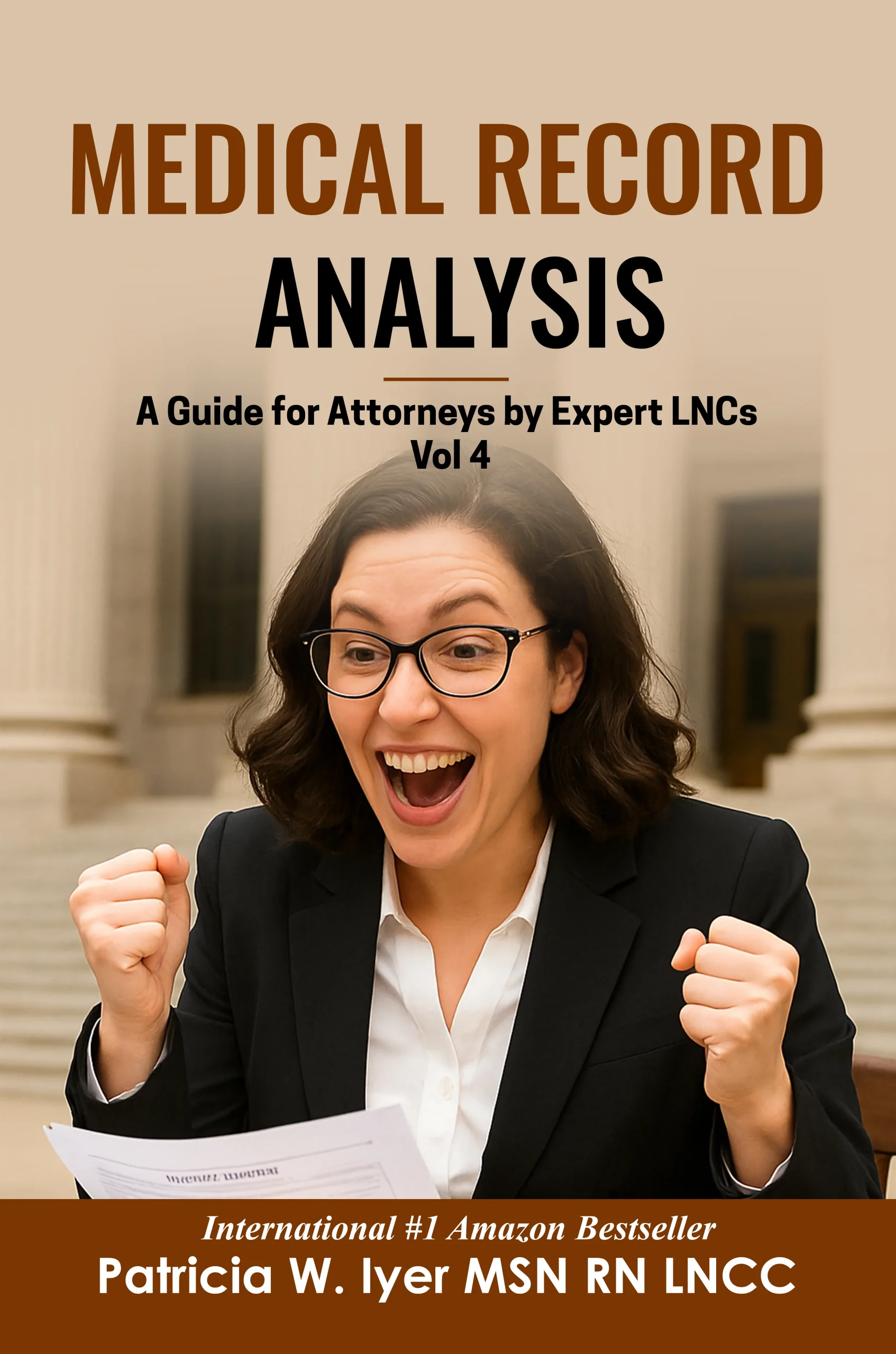
Choose the format that fits your workflow:
Digital Download
Immediate access—ideal for searching, highlighting, and keeping alongside case files.
Paperback Edition
A durable reference you can tab, flag, and pull from your shelf whenever a similar case appears.